
Quick answer: A straightforward valve can turn around in days and a complex large-bore valve in a week or two, but the number is set by the shop, not the valve. In-house inspection, on-site machining, crane availability, and parts access decide whether yours moves or waits.
Why Hours Turn Into Dollars During an Outage
An unplanned outage is not a scheduling inconvenience. It is lost production measured by the hour, and a single stuck or leaking valve can hold an entire unit down. When that happens, the question is never “what does the repair cost.” It is “when do I get the valve back.” Every decision a repair shop makes from the moment your valve hits the dock either compresses that clock or stretches it.
The trap is assuming all shops run at the same speed. They do not. Two shops can quote the same scope and deliver a week apart, because turnaround time is built from steps most buyers never see until the schedule slips.
How Turnaround Time Is Actually Built
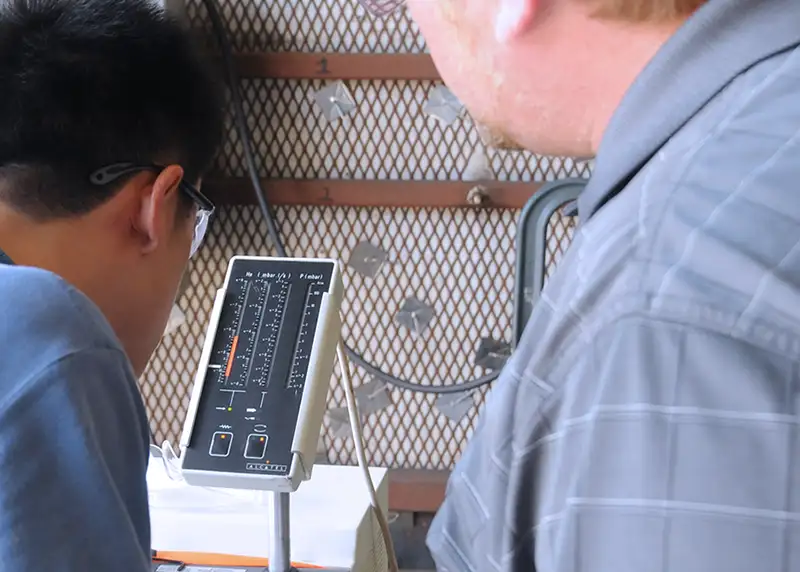 Real turnaround is the sum of these stages, and a delay in any one of them moves your finish date:
- Intake and triage. The valve is logged, identified, and assessed. A shop that diagnoses fast knows within hours what the job really is, instead of guessing and re-quoting mid-repair.
- Teardown and inspection. The valve comes apart and the seal areas, body, and trim get measured against spec.
- Non-destructive evaluation. Radiography, magnetic particle, and dye penetrant confirm whether the body is sound. In-house NDE and pressure testing is one of the single biggest accelerators here.
- Machining and welding. Seats are remachined or weld-overlaid and brought back to dimension.
- Reassembly and final test. The valve is rebuilt and pressure tested back to its original rating before it ships.
Notice what is not on that list as a separate line: shipping the valve to a third party for X-ray, then waiting for it to ship back. That round trip is where outsourced shops quietly lose days.
The Four Levers That Decide Your Date
- Vertical integration. When machining, welding, and inspection all happen under one roof, the shop controls its own sequence and can run stages back to back. When any stage is outsourced, your valve joins another vendor’s queue and your schedule is no longer in your hands.
- Crane and floor capacity. A large coker or gate valve cannot move through a shop faster than it can be lifted and staged. Eight overhead bridge cranes, a 37-foot hook height, and capacities to 40 tons mean heavy valves get handled immediately instead of waiting for the one available lift.
- Engineering on staff. When inspection turns up something unexpected, a degreed engineer on site can make the material or repair call in real time. Without that, the valve sits while someone waits for an answer.
- Parts and authorization. OEM-authorized access to correct trim and soft goods removes the longest hidden delay of all, which is sourcing the right part after teardown.
When the Fastest Path Is the Field, Not the Shop
Speed does not always mean shipping the valve out. Sometimes the fastest route keeps it in place.
Choose field service when the valve is welded into the line, when removal would damage adjacent equipment, or when on-site repair clears the critical path faster than a round trip to the shop. Choose in-shop repair when the work needs heavy machining, full NDE, or controlled pressure testing that only a fixed facility can deliver.
Here is what goes wrong when the call is made carelessly. Send a valve to the shop that should have been repaired in place and you add rigging, transport, and re-welding to the clock. Try to do shop-grade machining in the field and you risk a rushed repair that fails on startup, which is the most expensive outcome of all because the unit comes back down.
What Slows a Repair Down, Every Time
- An unidentified valve with no nameplate data, forcing reverse-engineering before work can begin
- Outsourced inspection or machining that puts your job in someone else’s line
- Hidden body damage found late because early NDE was skipped
- Waiting on trim or packing because the shop is not authorized to source it directly
- A shop physically unable to lift the valve, so it stages behind smaller jobs
Every one of these is avoidable, and every one is a question you can ask before you ship.
The United Valve Speed Advantage
Track record: United Valve has handled outage and turnaround work for Gulf Coast refineries and chemical plants since 1961, so the crew has seen the failure modes that catch newer shops off guard.
Consistency under pressure: a 104,000-square-foot, vertically integrated Houston plant keeps teardown, machining, welding, and testing on one floor and one schedule, which is what holds a promised date during a live outage.
Tooling and inspection: on-site CNC machining, weld overlay, and a complete NDE and engineering testing suite remove the outside-vendor wait that stretches competitors’ timelines.
Reach when you cannot wait: Houston and Corpus Christi locations plus mobile field crews cover the upper and lower Gulf Coast. If a valve is holding your unit down right now, contact the team and they will move on it.
Frequently Asked Questions
What is a realistic turnaround for an emergency valve repair?
A simpler valve can be back in days, while a large or complex valve may take a week or two. The honest answer depends on body condition, parts availability, and whether the shop inspects and machines in-house. Any shop quoting a fixed number before teardown is guessing.
Does in-house NDE really save that much time?
Yes. Outsourced radiography or material testing means physically shipping the valve out and waiting for it to come back, which can add days to a repair that otherwise runs continuously. Keeping inspection on site removes that round trip entirely.
How do I help a shop turn my valve faster?
Send the nameplate data and any drawings you have, flag the service conditions, and state your outage deadline up front. Clear identification removes the reverse-engineering step, and a known deadline lets the shop sequence your job correctly from intake.
Is field repair always faster than shop repair?
No. Field service is faster when removal is the bottleneck or the valve is welded in line, but shop repair wins when the job needs heavy machining or controlled testing. The fastest real-world outcome comes from matching the method to the valve, not defaulting to one.
Why do two shops quote such different timelines for the same valve?
Usually because one outsources inspection or machining and the other does not. Vertical integration, lifting capacity, and on-staff engineering are what let a shop compress the schedule, and they are exactly what you cannot see on a quote sheet.