
Quick answer: For most large-diameter valves on the Gulf Coast, repair wins on both cost and schedule. A new 24-inch-plus valve can mean a long OEM lead time and a heavy capital outlay, while an authorized rebuild usually returns the valve to original spec in a fraction of that time for far less money.
Why This Decision Carries So Much Weight
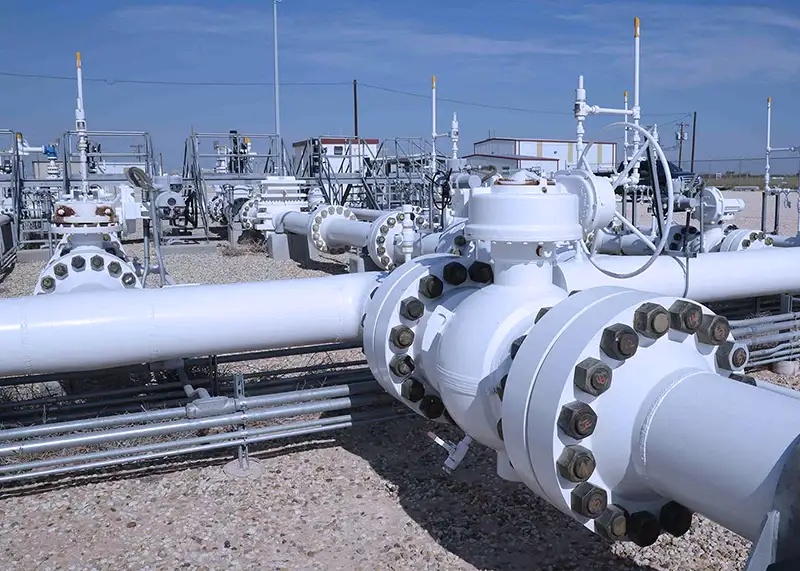 Large-diameter valves, delayed coker valves, butt-weld-end bodies, and high-pressure power-plant valves are some of the most expensive single items in a refinery or chemical plant. They are also long-lead. The repair-or-replace question rarely lands on your desk at a convenient time. It usually shows up during a planned turnaround or an unplanned outage, when every day of schedule already has a dollar figure attached to it.
- A new large-bore valve can carry an OEM lead time measured in months, and that clock starts only after capital approval clears.
- Replacement almost never means “drop in a new valve.” It can handle repiping, flange-face work, field machining for fit-up, and fresh rigging on a multi-ton body.
- A documented rebuild keeps the original casting and bore in service and sidesteps most of that downstream disruption.
The cost of getting this wrong is not theoretical. Over-replace and you burn capital and schedule you did not need to spend. Under-invest in a sloppy repair and the valve comes back to bite you on the next run.
The Real Cost and Lead-Time Breakdown
What replacement actually costs
- The valve itself, at large-diameter, high-alloy pricing
- Freight and handling on a body that can weigh tens of thousands of pounds
- Crane time and rigging on both ends
- Cutting out and re-welding, plus inspection on the new welds
- Possible field machining to correct alignment and flange fit
- Engineering hours if the new valve differs in rating, face-to-face dimension, or trim
What a repair actually costs
- Teardown, cleaning, and dimensional inspection
- Non-destructive evaluation and pressure testing to confirm the body is sound
- Seat and seal-area remachining or lapping, with weld overlay where it is needed
- New soft goods, packing, and gaskets, plus trim replacement if the service calls for it
- Reassembly and a full pressure test back to the original rating
Because a repair reuses the existing body, the line items that make replacement painful, namely freight, re-piping, and fit-up, mostly disappear. On schedule, the gap widens further when a shop runs large-diameter valve repair under one roof instead of shipping subcomponents out for machining or radiography.
When to Repair, and When to Replace
Repair is the right call when:
- The body casting is sound, with no through-wall erosion or cracking
- The metallurgy still suits the service conditions
- Authorized parts and trim are obtainable
- You need the valve back inside the turnaround window
Replacement earns its cost when:
- Wall loss exceeds code-allowable limits
- The valve keeps failing because the original material or trim was wrong for the service, and re-engineering cannot economically correct it
- A process change demands a different pressure class or bore that even valve modification cannot reach
Here is what happens if you choose wrong. A valve “repaired” without proper inspection can pass a quick bench check and still fail in service, forcing a second outage at full cost. Reflexive replacement, on the other hand, parks capital in inventory and stretches a turnaround that a rebuild would have cleared days earlier.
Why Valve Repair Shops Aren’t Equal
Two shops can both quote your large-bore valve and deliver wildly different outcomes.
- Vertical integration: a shop that machines, welds, and inspects in-house controls its own schedule. One that outsources radiography or seat machining is at the mercy of someone else’s queue.
- Lifting capacity: a 36-inch coker valve is useless on a floor that cannot lift it. Eight overhead bridge cranes, a 37-foot hook height, and capacities to 40 tons decide whether your valve can even be handled, let alone turned around fast.
- Engineering depth: re-rating, material substitution, and failure calls need degreed engineers, not a best guess from the shop floor.
- Authorization: OEM-authorized standing protects parts traceability and your warranty position.
The Gulf Coast Advantage You Get From United Valve
Experience: United Valve has rebuilt and modified large-diameter, coker, and high-pressure valves since 1961, working from the heart of the Texas refining and petrochemical belt.
Reliability: the work runs through a vertically integrated 104,000-square-foot Houston plant, so machining, welding, and testing stay on one schedule the team controls instead of handing it to outside vendors.
Quality and technology: in-house CNC machining, weld overlay, and a full inspection suite mean every rebuild is documented and pressure tested before it ships.
Coverage: with Houston and Corpus Christi facilities, both in-shop capability and field service crews, United Valve reaches operators across the upper and lower Gulf Coast. When you are ready to put real numbers against a specific valve, request a quote and the team will scope it.
Frequently Asked Questions
Is a repaired large-diameter valve as reliable as a new one?
Yes, when the rebuild is done to OEM spec and verified. A properly remachined, weld-repaired, and pressure-tested valve carries full documentation and performs to its original rating. The reliability gap comes from skipped inspection, not from the act of repairing.
How much faster is repair than replacement?
It varies by valve, but the gap is usually large. A new large-bore valve can take months to arrive, while an authorized rebuild is often measured in weeks or less, especially when machining and inspection happen in-house rather than at outside suppliers.
Will a third-party repair void my valve warranty?
Not when the shop is OEM-authorized. Authorization means approved parts, approved procedures, and traceability, which is exactly what protects your warranty standing and your audit trail. An unauthorized repair is where that protection breaks down.
When is replacement genuinely the better choice?
When the body shows wall loss beyond code limits, when repeated failures trace back to the wrong base material, or when a process change requires a rating or bore that modification cannot reach. In those cases, new is the defensible answer.
Can a shop handle the rigging for a valve weighing tens of thousands of pounds?
Only if it has the cranes for it. Lifting capacity, not just machining skill, decides whether a shop can take your largest valves. Confirm hook height and rated tonnage before you ship anything heavy.