
Quick answer: Neither wins universally. Field service saves money on welded-in, oversized, or hard-to-access valves where removal costs more than the repair. In-shop wins on volume, heavy machining, and verified testing. The cheapest turnarounds stage shop work months early and reserve field crews for the valves that truly cannot move.
The Turnaround Math Nobody Puts on the Quote Sheet
Turnaround budgets rarely blow up because a valve repair cost too much. They blow up because of everything around the repair: craft labor density on a congested unit, crane and scaffold rental burning by the day, and valve scope discovered three weeks into a five-week window. The in-shop versus field decision sits right in the middle of that math, because it determines whether each valve consumes scarce on-site resources or moves to a fixed facility where none of those meters are running.
Planners who treat this as a per-valve pricing question miss the real lever. The question is where each hour of work is cheapest to perform, and the answer is different for different valves on the same unit.
Where Field Service Saves Real Money
Field valve service eliminates the most expensive line items on certain valves entirely:
- No removal and reinstallation. On a welded-in valve, going to the shop means torch cuts, two new field welds, and the weld inspection that follows. In-place service makes all of that disappear.
- No transport on monsters. When a valve is large enough that moving it means permits, lowboys, and crane picks at both ends, the freight bill alone can rival the repair.
- No critical-path detour. A valve serviced in place during its line’s planned window never holds the recommissioning sequence hostage to a truck schedule.
- Actuated assemblies stay assembled. Many valve actuation issues, from adjustment to component swap-out, are resolved in place without disturbing the valve at all.
The trade-off is equally concrete: field crews work at site labor rates, inside permit systems, around other crafts, and with portable tooling. Work that needs a machine tool, a weld overlay, or a witnessed pressure test does not belong on a unit deck.
Where In-Shop Service Saves Real Money
In-shop repair charges you transport and swing time, then pays you back in ways the field never can:
- Parallel processing. A turnaround that generates eighty valves can have them moving through teardown, machining, and test simultaneously in a shop, instead of queuing behind one field crew’s sequence.
- Full-depth repair. Seat refacing, body welding, trim manufacture, and verified testing happen at shop quality, which is what keeps those valves off next year’s scope list.
- Predictable cost per valve. Shop hours are cheaper than turnaround-site hours, and there is no scaffold, crane rental, or congestion premium attached to them.
- Specialty capability. Severe-duty equipment like HP power plant valves and large-diameter valves demands fixtures and test capacity that exist only in a fixed facility.
The shop’s weakness is the same as its strength: the valve has to come out, travel, and come back, and on the wrong valve that overhead erases the savings.
The Decision Framework, Valve by Valve
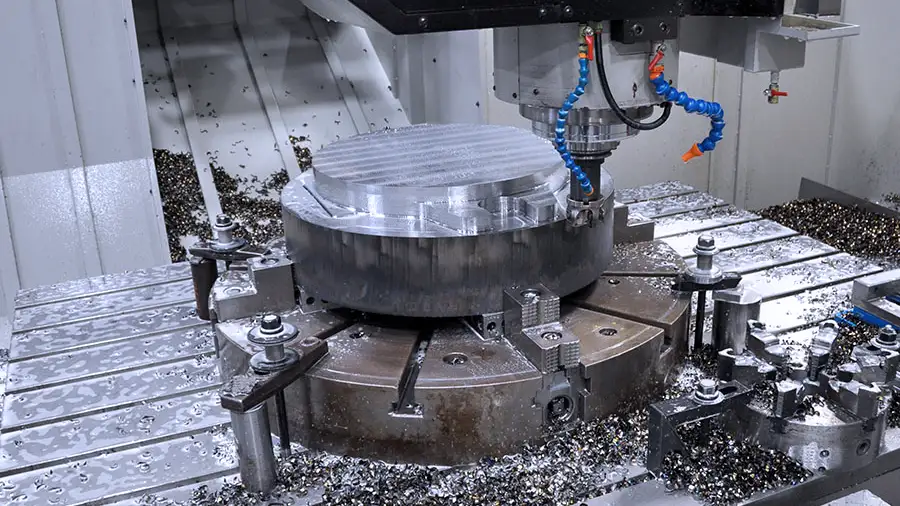 Send it to the shop when the valve unbolts cleanly, when the work involves machining, welding, or testing, when the same scope covers dozens of similar valves, or when the valve can be pulled and staged before the turnaround even begins. Keep it in the field when the valve is welded in, when its size makes transport the dominant cost, when the fix is packing, adjustment, or actuation work within portable-tool reach, or when the recommissioning schedule cannot absorb a round trip.
Get it wrong in either direction and the costs are predictable. Ship everything, and you pay freight and handling on dozens of valves that needed an hour of in-place work, while your shop-bound critical valve waits in the same queue. Field everything, and shop-grade defects get a field-grade patch, which means the leak shows up at startup, when fixing it costs more than the entire original decision was worth.
The Hybrid Play That Actually Wins Turnarounds
The cheapest valve programs are decided months before the unit comes down. A pre-turnaround walkdown classifies every valve in scope: shop, field, or monitor-and-defer. Removable valves with known issues are pulled early on routine outages and repaired before the turnaround starts, so they re-enter the plant as staged spares rather than turnaround scope. Field crews are then booked only for the welded-in and oversized population, sized to that real workload instead of padded for uncertainty.
One detail makes or breaks the hybrid: using a single vendor for both halves. When the shop and the field crew belong to the same organization, a valve that surprises everyone at teardown moves between them without a new purchase order, a finger-pointing session, or a scope dispute. Two vendors mean every surprise becomes a commercial negotiation in the middle of your outage.
One Shop, Both Crews: Where United Valve Stands
Decades of turnaround seasons: serving Gulf Coast refining and petrochemical turnarounds since 1961, United Valve has planned valve scopes through every cycle of the industry, and that planning help is part of the service.
The same standard in both places: field crews are backed by the same engineering staff and procedures as the Houston plant, so “field quality” and “shop quality” are the same quality, documented either way.
Depth when the valve has to come in: a full machining, welding, and test floor handles the specialty work, including power plant and large-bore valves, that no field crew anywhere can reproduce on a unit deck.
Positioned for your outage map: Houston and Corpus Christi locations cover the upper and lower Gulf Coast turnaround corridor. The biggest savings come from early planning, so request a quote while your valve scope is still a spreadsheet, not a crisis.
Frequently Asked Questions
Is field valve service cheaper per valve than shop repair?
Sometimes, and that is exactly the trap. Field service is cheaper on valves where removal dominates the cost, and more expensive on valves needing machining or testing, because site labor and limited tooling stretch the hours. Compare total installed cost per valve, not the rate sheet.
How far ahead of a turnaround should valve scope be decided?
Months, not weeks. Early classification lets removable valves be repaired ahead of time, lets long-lead parts be ordered, and lets field crews be booked to a real workload. Scope decided after the unit is down is scope paid for at premium rates.
What happens when hidden damage is found on a valve being serviced in the field?
It becomes a routing decision under time pressure. With a single vendor running both field and shop, the valve moves to the shop and a spare or temporary plan covers the gap. With separate vendors, it becomes a new procurement event in the middle of your outage.
Can pressure testing be done in the field?
Meaningful verified testing belongs in a fixed facility with proper rigs, instrumentation, and documented procedures. Field crews verify their work within the limits of in-place methods, which is one reason shop routing is the right call for valves whose criticality demands a witnessed test.
Does splitting valve work between two contractors ever save money?
On paper, occasionally. In practice the savings vanish at the first surprise, when a valve needs to move between scopes and neither contract anticipated it. A single accountable vendor for shop and field removes the most expensive turnaround risk, which is the handoff.